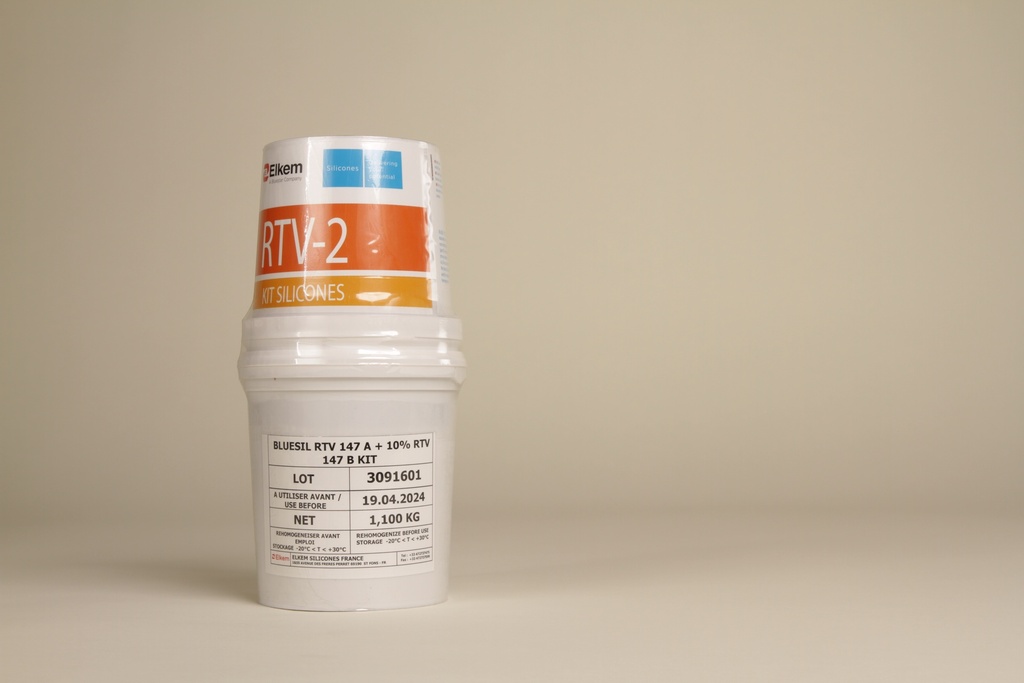
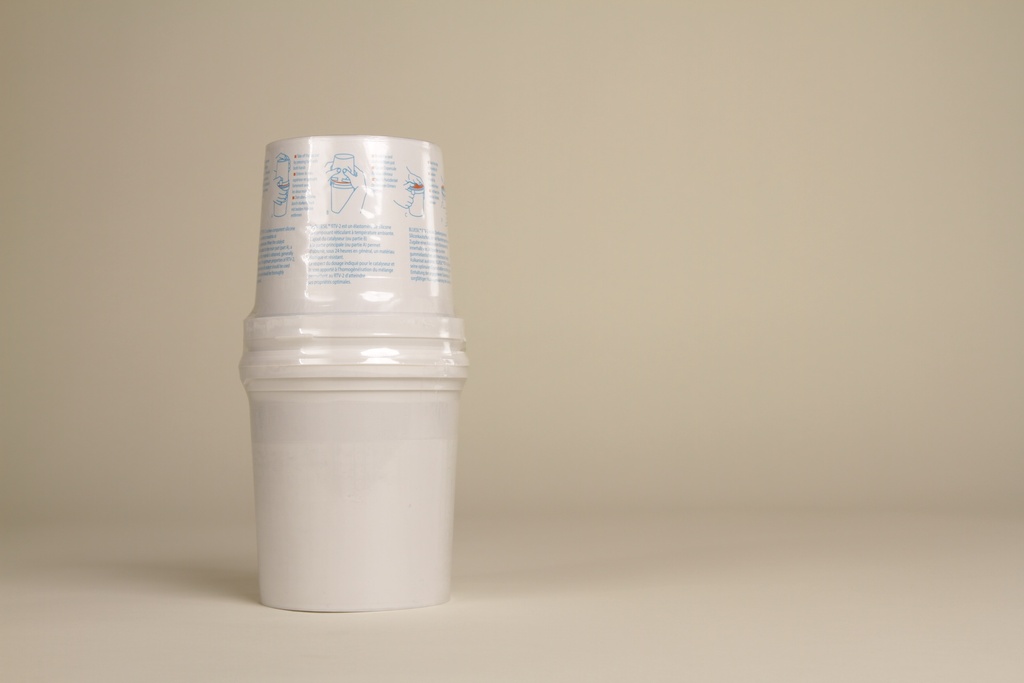
Bluesil RTV 147 A + B Black (1.1 kg kit)
BLUESIL® RTV 147 A/B – High-temperature resistant 2K silicone rubber for embeddings and mold seals
High-viscosity two-component platinum-cured silicone potting compound (Shore A 60, beige/blue) for thermal protection, flexible insulation, and electrical encapsulation — maximum temperature +300 °C
documents
Internal reference:
40-906.PG.BLK
HS code:
39100000
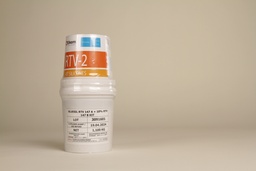
Bluesil RTV 147 A & B is a high-viscosity two-component platinum-cured silicone potting compound (Shore A 60, beige/blue) designed for thermal protection, flexible insulation, and electrical encapsulation—maximum temperature +300 °C.
This product line includes two-component polyaddition silicone elastomers with very high temperature resistance (up to +300 °C) for thermal protection, flexible insulation materials, and high-performance electrical encapsulation. RTV 147 is designed for specific industrial applications—see below for its key properties and applications.
Bluesil RTV 147 is characterized by very high temperature resistance (up to +300 °C) and high tear strength (>15 kN/m). RTV 147 A&B can be combined with RTV 148 A&B or a mixture of 147A+148A—this allows for the adjustment of medium hardness levels between Shore A 40 and 60.
What sets RTV 147 apart
What is RTV 147 used for?
processing
Recommended Accessories
Important information
RTV 147 Compared to Related RTV Products
Crosslinking system, mechanics, and processing times listed side by side — all values taken from the official Elkem TDS. “— ” = not specified in the data sheet.
RTV 147 Current Product |
RTV 148 → | RTV 141 → | RTV 8352 LV → | |
|---|---|---|---|---|
| Networking System | 2K Polyaddition (Pt) | 2K Polyaddition (Pt) | 2K Polyaddition (Pt) | 2K Polyaddition (Pt) |
| mixing ratio | 10 to 1 | 10–1 (with RTV 147 B) | 10 to 1 | 1 : 1 |
| Color | Beige / light blue (B) | Beige / light blue (B) | Transparent, colorless | Whitish |
| Shore A hardness | A 60 | A 40 | A 50 | A 55 |
| elongation at break | 180% | 160% | 120 % | 78 % |
| tensile strength | 6 MPa | 3.5 MPa | 6 MPa | 2.3 MPa |
| tear resistance | >15 kN/m | — | — | — |
| pot life | 2 hours | 4 hours | 4 hours | 130 min |
| demolding time | 24–48 hours | 24–48 hours | 24–48 hours | 8 h |
| Mixed viscosity | 150,000 mPa·s | 10,000 mPa·s | 4,000 mPa·s | 2,200 mPa·s |
| Main application | heat shields | Low-viscosity high-temperature potting compound | Optoelectronic connections | Electrical Engineering Encapsulation |
Technical Specifications for Bluesil RTV 147 A + B Black (1.1 kg Kit)
| product information | |
|---|---|
| manufacturer | Elkem Silicones |
| brand | Bluesil |
| container | 1.1 kg |
| network type | Addition (Platinum) |
| Number of components | 2K (two-component) |
| mixing ratio | 10:1 |
| Additional features | |
|---|---|
| UV resistance | No |
| Physical properties | |
|---|---|
| Viscosity (uncrosslinked) (mPa·s) | 150 |
| Paint cured | Black |
| Self-leveling | No |
| consistency | Thixotropic |
| Mechanical properties | |
|---|---|
| Tensile strength (MPa) | 6 |
| Elongation at break (%) | 3 |
| Tensile strength (N/mm) | 15 |
| Electrical Properties | |
|---|---|
| Electrical insulation | Yes |
| product approvals | |
|---|---|
| food contact | No |
| Suitable for medical use | No |
For binding values, please refer to the technical data sheet (TDS) in the "Documents" tab.
Documents and Data Sheets
Click on a document to view a preview, or click the download icon to download it directly.
Frequently Asked Questions About RTV 147
Practical questions regarding processing and design — answered by SILITECH.
Bluesil RTV 147 A & B: High-viscosity two-component platinum-cured silicone potting compound (Shore A 60, beige/blue) for thermal protection, flexible insulation materials, and electrical encapsulation — maximum temperature +300 °C. Primary applications include thermal protection devices, flexible insulation materials, and molded gaskets.
Polyaddition curing is a two-component silicone chemistry that uses a platinum catalyst. Component A contains the platinum complex, while Component B contains the SiH crosslinker. When mixed, the components cure without releasing reaction byproducts—no shrinkage due to outgassing, excellent dimensional accuracy, and low linear shrinkage. Important: Polyaddition silicones are inhibited by various substances—sulfur-vulcanized natural rubbers, tin-catalyzed RTV silicones, amine-catalyzed epoxy resins, and PVC stabilized with tin salts. If in doubt, a preliminary test should be conducted.
Stir components A and B thoroughly before each use. Measure out the exact amount according to the mixing ratio specified in the TDS (see comparison table above)—preferably by weight. Mix using an electric or pneumatic mixer at low speed (to minimize air entrapment). Degas the mixture under vacuum (30–50 mbar)—the material expands to 3–4 times its original volume, bubbles escape, and the material deflates after 5–10 minutes. Then slowly pour into the mold from the lowest point to avoid air entrapment. For polyaddition systems, avoid contact with inhibitors (sulfur rubber, tin RTV, amine epoxies, PVC with tin salts).
Store in the unopened original container in a dry, cool place—typically between +5 and +30 °C; see the TDS for exact values. Store components A and B separately; seal airtight after opening. Polyaddition systems are not sensitive to moisture but should be stored in a cool place to maintain pot life. Consult the Safety Data Sheet (SDS) before use.
In the comparison table above, you will find related RTV products with different hardness levels, pot lives, or application profiles. If you are unsure about the best choice, we would be happy to advise you—please contact SILITECH with details about your application (substrate, desired hardness, processing time, and requirements for mechanical properties and durability).
Can't find your question here?
Our technical team will provide you with personalized advice on material selection, processing issues, and specific requirements. Quickly and professionally.
product specifications
| product information | |
|---|---|
| manufacturer | Elkem Silicones |
| brand | Bluesil |
| container | 1.1 kg |
| network type | Addition (Platinum) |
| Number of components | 2K (two-component) |
| mixing ratio | 10:1 |
| Additional features | |
|---|---|
| UV resistance | No |
| Physical properties | |
|---|---|
| Viscosity (uncrosslinked) (mPa·s) | 150 |
| Paint cured | Black |
| Self-leveling | No |
| consistency | Thixotropic |
| Mechanical properties | |
|---|---|
| Tensile strength (MPa) | 6 |
| Elongation at break (%) | 3 |
| Tensile strength (N/mm) | 15 |
| Electrical Properties | |
|---|---|
| Electrical insulation | Yes |
| product approvals | |
|---|---|
| food contact | No |
| Suitable for medical use | No |
| keywords | |
|---|---|
| keywords | |
| Mechanical properties | |
|---|---|
| Shore A hardness | 60.0 Shore A |
| Modulus at 100% elongation | 3.2 MPa |
| tensile strength | 6.0 MPa |
| elongation at break | 180.0 % |
| Tear resistance | 15.0 kN/m |
| Linear shrinkage | < 0.1% |
| processing | |
|---|---|
| Viscosity of the mixture | 150,000 mPa·s |
| Viscosity Comp. A | 150,000 mPa·s |
| Viscosity Comp. B | 10,000 mPa·s |
| Pot life at 23°C | 120.0 min |
| demolding time | 2,160.0 min |
| Physical & Thermal | |
|---|---|
| Density (23°C) | 1.24 g/cm³ |
| Temperature resistance (duration) | -70 to 250 °C |
| Peak temperature (short-term) | 300 °C |
| thermal conductivity | 0.31 W/(m·K) |
| Electrical specifications | |
|---|---|
| Dielectric constant ε (1 kHz) | 2.9 |
| Dielectric strength | 18.0 kV/mm |
| Forward resistance | 5e+14 Ω·cm |
| Loss factor tan δ | 0.003 |
| storage | |
|---|---|
| Shelf life in original packaging | 18 months |
| Storage temperature | -20 to 30 °C |
Documents and Data Sheets
Safety Data Sheets (SDS) and Technical Data Sheets (TDS) available for download: